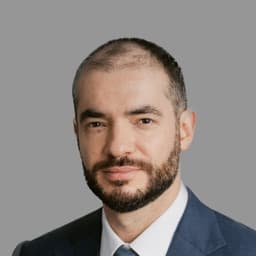
Catalyst · b. 1986
Ilya Sutskever
The co-author of AlexNet and co-founder of OpenAI who, more than almost anyone alive, turned deep learning from a minority position into the dominant paradigm of artificial intelligence.
“The thing that I find most exciting about deep learning is that it actually works.”
— Lex Fridman Podcast #94, 2020
Ilya Sutskever was born in 1986 in Nizhny Novgorod, Russia, and emigrated with his family to Israel as a child before eventually settling in Canada. He enrolled at the University of Toronto, where he came under the influence of Geoffrey Hinton — arguably the most consequential mentorship in the history of modern AI. Hinton's lab was one of the few places in the world in the mid-2000s where neural networks were still taken seriously, and Sutskever arrived at precisely the moment when that conviction was about to be vindicated.
In 2012, Sutskever, alongside Alex Krizhevsky and Geoffrey Hinton, published 'ImageNet Classification with Deep Convolutional Neural Networks,' the paper describing AlexNet. The system reduced the top-5 error rate on the ImageNet benchmark from 26 percent to 15 percent — a margin so large that many observers initially suspected an error. The result was not an incremental improvement; it was a discontinuity. Sutskever was 26 years old. The paper triggered an industry-wide pivot toward deep learning that would reshape computer vision, speech recognition, and within a few years, natural language processing.
After completing his PhD at Toronto in 2013, Sutskever was briefly recruited to Google Brain before co-founding OpenAI in 2015 alongside Sam Altman, Greg Brockman, Elon Musk, and others. He served as Chief Scientist, overseeing the research agenda through the development of GPT-2, GPT-3, Codex, DALL·E, and GPT-4. In 2023 he was briefly and publicly involved in the board crisis that temporarily removed Sam Altman as CEO, one of the most scrutinized governance episodes in Silicon Valley history. In 2024 he departed OpenAI and announced the founding of Safe Superintelligence Inc., a safety-focused research company.
Key Works
- 2012
ImageNet Classification with Deep Convolutional Neural Networks
The AlexNet paper demonstrated that deep convolutional networks trained on GPUs could shatter existing benchmarks on large-scale image recognition, triggering the modern deep learning era.
- 2014
Sequence to Sequence Learning with Neural Networks
Introduced the encoder-decoder LSTM architecture for sequence transduction, becoming the direct predecessor to attention-based models and transformer-era machine translation.
- 2011
Generating Text with Recurrent Neural Networks
An early demonstration with Hinton that RNNs could generate coherent character-level text, establishing neural language modeling as a serious research direction.
- 2016
Training Very Deep Networks (with Layer Normalization work at OpenAI)
Co-authored foundational work on layer normalization that stabilized training of deep networks and became a standard component in transformer architectures.
- 2023
GPT-4 Technical Report (OpenAI, as Chief Scientist)
As the scientific leader overseeing GPT-4's development, Sutskever presided over the most capable publicly deployed language model to that date, demonstrating the practical ceiling of the scaling paradigm.
The direct lineage from AlexNet runs through virtually every serious computer vision system deployed today — from medical imaging to autonomous vehicles to facial recognition. The architectural principles Sutskever helped demonstrate, that depth and scale in neural networks trained on large datasets with GPU compute could dramatically outperform hand-engineered features, became the founding axioms of the next decade of AI research. Researchers who had spent careers on alternative approaches pivoted almost overnight, and the wave of venture capital and talent that followed was historically unprecedented for a single academic result.
At OpenAI, Sutskever's influence on large language models was structural. His emphasis on scaling — the systematic belief that more parameters, more data, and more compute reliably produce better models — shaped the research culture that produced the GPT series. That line of work in turn enabled the commercial deployment of conversational AI at a scale that had no precedent, influencing fields as varied as legal research, software engineering, education, and scientific discovery. Researchers including Alec Radford, John Schulman, and Andrej Karpathy did formative work under or alongside him at OpenAI.
Legacy
The architectural intuitions Sutskever helped prove in 2012 are now embedded in the substrate of global technology: the convolutional neural network principles from AlexNet live in every smartphone camera, every content moderation system, every radiology tool that flags anomalies. The scaling philosophy he championed at OpenAI runs inside GPT-4, Claude, Gemini, and their successors. The models are larger, the hardware is faster, and the applications span domains their creators did not foresee — but the foundational bet, that deep networks trained at scale would work, was the one Sutskever helped win first and most visibly.
ImageNet Classification with Deep Convolutional Neural Networks
Alex Krizhevsky, Ilya Sutskever, Geoffrey E. Hinton · 2012
https://papers.nips.cc/paper_files/paper/2012/hash/c399862d3b9d6b76c8436e924a68c45b-Abstract.html
Sequence to Sequence Learning with Neural Networks
Ilya Sutskever, Oriol Vinyals, Quoc V. Le · 2014
https://arxiv.org/abs/1409.3215
Layer Normalization
Jimmy Lei Ba, Jamie Ryan Kiros, Geoffrey E. Hinton · 2016
https://arxiv.org/abs/1607.06450
Ilya Sutskever — Wikipedia
Wikipedia contributors · 2024
https://en.wikipedia.org/wiki/Ilya_Sutskever