Apr 22, 2026 · 7 min read
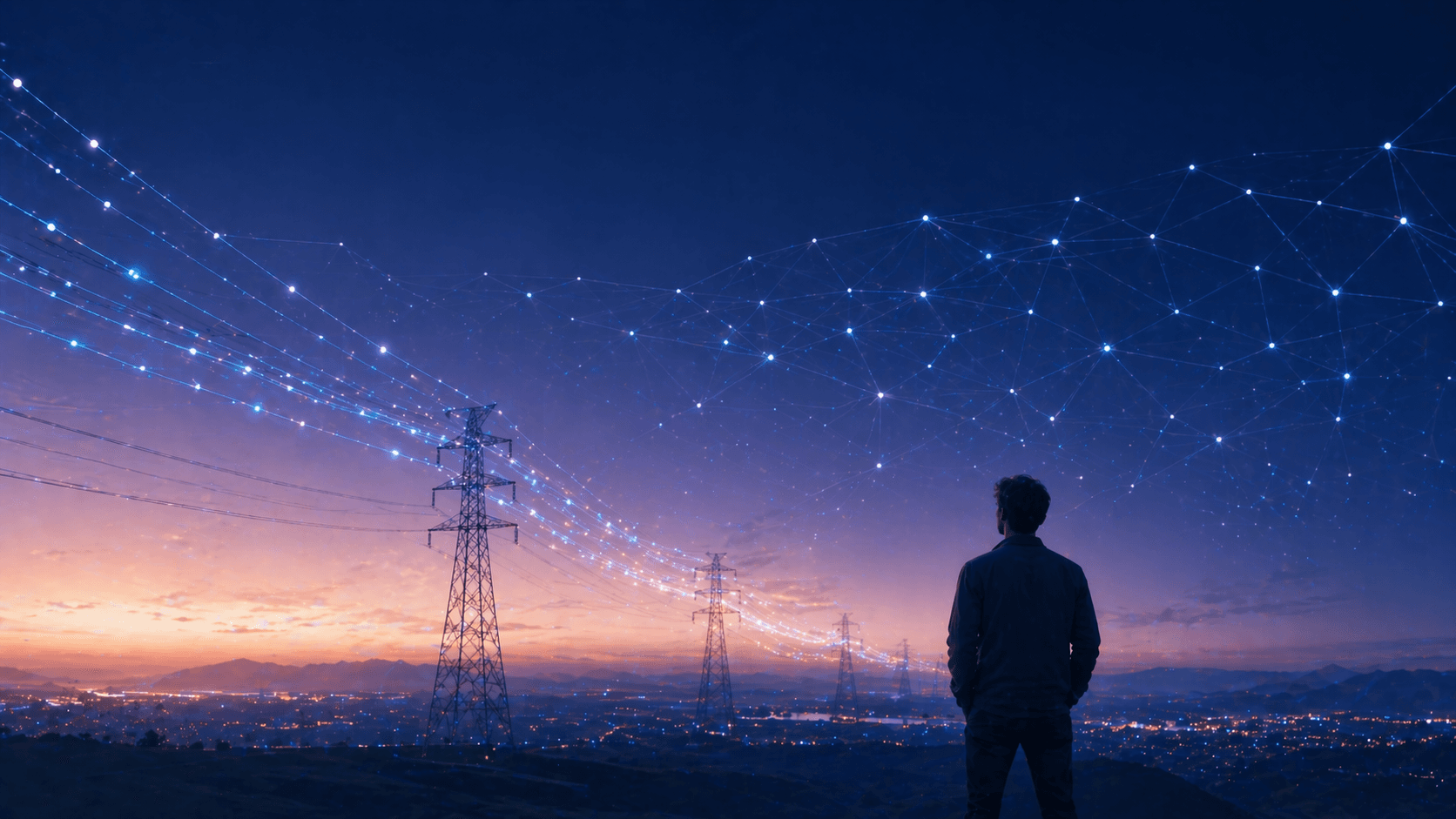
AI is not going anywhere. It is becoming as fundamental as electricity, gas, oil, and the internet.
Just imagine what would happen today if electricity stopped, if oil disappeared, or if the internet went down. Modern society would immediately feel the shock. Not gradually, not partially. Immediately and completely.
AI is moving in the same direction, but with an even deeper impact.
Unlike previous foundational technologies, AI does not only provide power, fuel, or connectivity. It provides something far more fundamental: applied intelligence. It enables systems to analyze, reason, create, and solve complex problems in ways that were once exclusive to humans. This is what makes AI categorically different from every infrastructure that came before it.
Electricity extended human physical capacity. The internet extended human reach. AI touches the very capability that defines human beings: advanced, analytical reasoning applied to real-world problems. And because of this, its long-term value may exceed that of any infrastructure we have ever built.
This is no longer theoretical.
In systems I've built, entire workflows now depend on AI responses. Decisions, classifications, structured outputs, all routed through model calls. When latency increases, the system slows. When costs spike, the system becomes economically unstable. When the API fails, the system does not degrade. It stops. Not partially. Completely.
Just one or two years ago, most people could not imagine agents capable of producing meaningful, production-ready outputs in minutes. Today this is already happening, not in research labs, but in operational systems handling real business processes.
The acceleration is not just technical. It is structural. At a certain point, AI no longer feels like a tool you are choosing to use. It becomes a dependency you cannot remove. And dependencies, by definition, are infrastructure.
There is a subtle but critical distinction that most builders miss.
When you integrate electricity into a building, you are not just adding a feature. You are making a commitment that shapes every subsequent decision: how the space is designed, how it operates, what it can and cannot do without power.
AI integration follows the same pattern, but it happens faster and with less visibility.
The systems I observe, and the ones I build, are not just using AI. They are reorganizing themselves around it. Decision trees that once ran on explicit logic now depend on model inference. Workflows that once required human judgment now route through a model call. Entire categories of work that once required a team are now handled by a pipeline.
When that pipeline breaks, there is no graceful fallback. The work simply does not happen. That is what a dependency looks like. That is what infrastructure looks like.
Every AI application can be thought of as a car. A car needs fuel to function. Without it, the engineering inside the vehicle is irrelevant. It does not move. The intelligence of the design, the quality of the components, the sophistication of the system: all of it is suspended, waiting for fuel.
AI systems are no different.
Today, their fuel is API-based access to large language models. Every request, every response, every decision is powered by tokens flowing between your system and external servers. This continuous exchange, invisible to most users and critical to every output, is the execution layer behind every modern AI system.
These tokens are the fuel. The API pipeline is the engine. And the companies that control those servers are, for now, the power plants. If that engine stops, the system stops.
Most builders treat this as a technical detail. It is not. It is a structural reality that defines the limits of what they own, what they control, and what they are exposed to.
Here is the misconception that matters most.
Most people think they are building AI systems. In reality, they are orchestrating access to someone else's intelligence. The distinction is not semantic. It defines the entire risk profile of what you are building.
Consider what you do not control in a typical AI-dependent system. You do not control the underlying model. The provider updates it, rolls it back, deprecates versions, or changes behavior, and your system responds accordingly, whether you intended that or not. You do not control pricing. Token costs can shift with a policy change, and what is economically viable today may not be tomorrow. You do not control availability. Rate limits, outages, and regional restrictions are outside your architecture, and when they happen, they are your problem regardless of fault. You do not fully control behavior. Prompts are imprecise instructions to a system you cannot fully inspect, and output consistency is probabilistic, not guaranteed.
This introduces a new class of risks that most organizations are not accounting for: security risks from API exposure, operational risks from rate limits and outages, economic risks from cost volatility, and strategic risks from vendor lock-in that deepens with every workflow you automate.
The pipeline is not just a technical dependency. It is a bottleneck, an attack surface, and a single point of failure, all at once. Infrastructure built on rented intelligence is fragile in ways that are hard to see until something breaks.
A transition is already underway, and it will redefine how AI systems are built.
In the coming years, we will see the rise of local AI models, systems that no longer depend entirely on external APIs for their core reasoning. Smaller, more efficient models are becoming capable enough to handle significant workloads on local hardware. The cost curve is moving. The performance gap is closing.
This is a fundamental shift in the nature of the infrastructure. It is the difference between consuming energy from a central grid and generating it yourself. The power plant moves closer to the system, and in some cases, inside it.
Local models will not fully replace cloud systems. The more likely outcome is hybrid architectures: latency-sensitive or privacy-critical operations run locally, while large-scale reasoning remains in the cloud. But the direction is clear, and it has significant implications for how systems should be designed today, even before local models are dominant.
The organizations that understand this shift and architect for it now will have structural advantages that are difficult to replicate later.
When intelligence becomes infrastructure, the most important question changes.
It is no longer: What can AI do?
It becomes: Who controls the systems that do it? And what does that mean for everyone else?
This shift is already reshaping where human value concentrates and where it erodes.
For most people in knowledge work, the transition is disorienting. Work that once required years of accumulated judgment (classifying documents, qualifying leads, generating reports, answering structured questions) is now being absorbed into pipelines. Not replaced in a dramatic, visible way. Absorbed quietly, workflow by workflow, decision by decision. The erosion is gradual until it is not.
The people who remain valuable in this environment are not those who perform tasks faster. They are those who understand how the systems work, who can design them, constrain them, evaluate their outputs, and take responsibility for their decisions. The leverage moves from execution to orchestration.
But there is a harder question beneath that one. As AI absorbs more of what we once called knowledge work, the definition of what it means to contribute, professionally, intellectually, economically, is changing. This is not a problem that better prompt engineering solves. It is a structural shift in how intelligence is produced, owned, and deployed in society.
Most people will use AI. It will feel empowering, up to the point where it becomes a dependency they did not choose and cannot exit. Some will build with it, designing the systems, writing the pipelines, shaping the workflows that others depend on. A small number will control it, owning the models, the compute, the distribution, the pricing, and defining the terms on which everyone else operates.
The gap between these groups is not just economic. It is a gap in agency, and it will widen faster than most institutions are prepared for.
The future of AI is not only about building smarter models. It is about understanding and controlling the infrastructure that powers them.
Most people will use AI. Some will build with it. A very small number will define how it operates.
And in a world where intelligence itself becomes infrastructure, control is not just a technical advantage. It is the difference between using the system and being shaped by it.

Alan Salomon
AI engineer and writer